
Under the New Code on Wages Bill 2019, employers will be required to give the minimum wages, notified by either the state or the Centre, to the unorganised sector, too.

Government suspects that many of these bank accounts were used to launder money, especially after the demonetisation in November 2016.

The aim of the programme is to increase the water table in the stressed areas through dams, ponds, and afforestation. According to a NITI Aayog study, by 2030, the country's water demand is projected to be twice the available supply, implying severe water scarcity for hundreds of millions of people and an eventual 6 per cent loss in the country's GDP.

Private insurance firms say, over the past few years, they have been investing on digital technologies to reach semi urban and rural areas.

After assuming power in 2014 with a full majority of its own, the BJP-led NDA government started an ambitious process of reforming labour laws in the form of codes aimed at making the framework less cumbersome with a variety of alterations. It had planned four codes each for industrial relations, wages, social security and welfare, and occupational safety, health and working conditions. To this end, 35 central labour laws were to be converted into four codes that would have had the virtue of streamlining labour relations. But none of the proposed code Bills could be converted into a law principally because neither trade unions nor industry representatives came on board. They hold the key to India's low-growth-high unemployment paradigm but the government may struggle to push them through this time as well. Somesh Jha explains why

'If there is a technical issue and the borrowers can resolve it within 30 days, you don't have to go through the bankruptcy court.' 'If the borrower is expecting a large disbursal of a facility or expecting a payment or receivables, in such cases it becomes practical to give a window for taking care of such circumstances. 'If banks had aggregated the assets and benefited with a long relationship with borrowers and now when assets get into a trouble, it is incumbent on banks to find resolution and take responsibility.'

The scheme, which will be effective from July 1, 2019 would benefit 36 million employees and 1.28 million employers. The ESI Act applies to factories with 10 or more workers and provides for medical, cash, maternity, disability and dependent benefits to employees drawing a salary of up to Rs 21,000 per month.

'The plan is to secure nod of the Union Cabinet and other relevant regulatory approvals within the next three months,' a senior finance ministry official said, requesting anonymity.

Since much of the voting was on religious lines, Mamata's rural focus became irrelevant.

'Neither the Centre nor the state is helping us, rather they are coming up with new ways to create stumbling blocks for the return of money.'
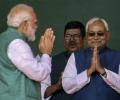
'He has attacked our enemies in their own backyard.'

One of the factors behind the rise in securitisation deals was State Bank of India's (SBI) decision to buy portfolio worth Rs 45,000 crore from NBFCs

Recently, CVC suggested that banks have a monitoring mechanism for bad loan sales to ARCs, with the cash flow statement from stressed assets shared with banks.

The delay will increase the provisioning burden on lenders and will also postpone the benefit of reversal of money set aside as provisions.
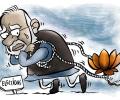
AIBOC in a letter to the Prime Minister, has said the government should not expect the banking fraternity to "join the political campaign of #MainBhiChowkidar" unless issues related to merger of banks, salary revision and staff recruitment, among others, are addressed.

/We will stay away from corporate loans,' C S Ghosh, managing director and chief executive officer of Bandhan Bank, tells Namrata Acharya.

Multiple reasons accounted for the losses, including manpower crunch and lack of clarity on the merger of National, United and Oriental, reports Namrata Acharya.
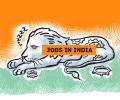
The problem of unemployment is spread across the economy.

According to NSSO, more than half of India's working-age population is out of labour force. In 2017-18, the youth unemployment rate was in the range 13.6-27.2 per cent.

With the two members quitting, the NSC now has only two members -- Chief Statistician Pravin Srivastava and NITI Aayog CEO Amitabh Kant.
 © 2025 Rediff.com - Investor Information - Advertise with us - Disclaimer - Privacy Policy - Sitemap - Feedback - About us - Terms of use - Grievances